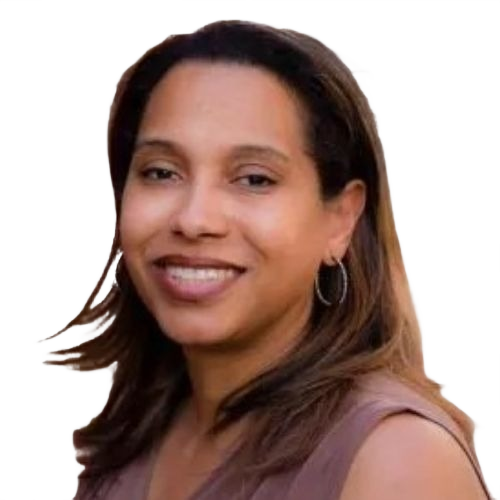
Jennifer Pharr
Candidate for Charleston · City Council At Large
- Education
- Bachelor of Arts, West Virginia University Charleston High School, Class of 1989
- Occupation
- Vice President, Community Engagement - FamilyCare Health Centers, Executive Director, FamilyCare Health Centers Foundation, Riggs Commercial Realty (Realtor), Small Business Owner
Jennifer L. Pharr is a two-term Charleston City Council Member At-Large, nonprofit executive, entrepreneur, and community advocate with a longstanding commitment to economic development, neighborhood revitalization, historic preservation, and improving the quality of life for Charleston residents. As Vice Chair of City Council's Planning, Streets, and Traffic Committee and a Commissioner on the Charleston Historic Landmarks Commission, Jennifer brings a collaborative approach to infrastructure improvements, responsible development, historic preservation, and neighborhood investment. A licensed West Virginia real estate salesperson and entrepreneur, she also operates a family-owned real estate business specializing in short-term and long-term residential rentals.
Her firsthand experience in property investment, renovation, and management reinforces her interest in revitalizing existing properties, preserving Charleston's architectural heritage, and strengthening residential neighborhoods. Professionally, Jennifer serves as Vice President of Community Engagement and Executive Director of the FamilyCare Health Centers Foundation, overseeing marketing, outreach, philanthropy, and strategic partnerships supporting more than 22 healthcare locations, five mobile medical and dental units, and over 270 employees. Under her leadership, FamilyCare's Facebook following has doubled, and its page has achieved monetization. She also authored FamilyCare's 35th Anniversary Commemorative Book, documenting the organization's history and contributions to healthcare throughout southern West Virginia.
Jennifer holds the Certified Fund Raising Executive (CFRE) designation, an internationally recognized credential demonstrating professional expertise, ethical fundraising practices, and a commitment to excellence in philanthropy. She is currently working to reestablish a local presence of the Association of Fundraising Professionals (AFP) in the Charleston area to expand professional development, collaboration, and support for the region's nonprofit sector.
Throughout her career, she has secured more than $5 million in grants and philanthropic contributions for community-serving organizations. Her civic involvement includes serving as former President of the Charleston-Institute Chapter of The Links, Incorporated, and as a founding member of African American Heritage Night and 10 in 10, Inc. In January 2020, Jennifer spearheaded the honorary street renaming of Dr. Martin Luther King Jr. Way alongside the late Kitty Dooley, recognizing Dr. King's enduring legacy and contributions to civil rights.
Jennifer serves on the boards of the Charleston Visitors Bureau and Charleston Urban Works. She is a graduate of the last class of Charleston High School, West Virginia University, Leadership West Virginia's Class of 2023, and Boston University's professional fundraising education program. Her community contributions have been recognized through the Charleston Main Streets Urban Leadership Award and the Charleston Area Alliance's We Love Our Community team recognition for redevelopment of the Atlas Building.
Above all her professional and civic accomplishments, Jennifer is most proud of her son, Zion, who earned his bachelor's degree in psychology from Wheeling University and is currently pursuing his master's degree at the University of Charleston. Jennifer remains committed to preserving Charleston's history, strengthening its neighborhoods, supporting responsible economic growth, and creating opportunities for future generations.
Why I'm running
As a two-term Charleston City Council Member At-Large, I bring experience in public service, nonprofit executive leadership, economic development, and community engagement. My work as Vice Chair of the Planning, Streets, and Traffic Committee and as a Historic Landmarks Commissioner has strengthened my understanding of Charleston's infrastructure, neighborhoods, and preservation needs. As a Certified Fund Raising Executive, real estate professional, and entrepreneur, I understand the importance of responsible investment, strategic partnerships, and fiscal accountability. I remain committed to listening to residents, protecting Charleston's unique character, strengthening neighborhoods, and creating opportunities for sustainable growth.
Beyond the ballot: Three questions
We asked candidates three questions about mistakes, disagreements and changing their minds. Their answers offer readers a look at how they reflect on their decisions, navigate difficult situations and approach public service beyond their policy positions.
1. A decision I got wrong
Tell us about a time you made a decision that you later realized was wrong. What led you to that decision, how did you respond when you recognized your mistake, and what did you learn from the experience?
2. Standing by my convictions
Describe a time you disagreed with someone whose support, approval or relationship mattered to you. How did you handle the disagreement, and what ultimately guided your decision?
3. Changing my mind
What is one belief or strongly held opinion you have changed your mind about? What caused you to reconsider your position, and how would that experience influence the way you serve in public office?
Where I stand on the issues
Candidates rated their agreement with five statements about issues affecting their communities, using a scale of 1 (strongly disagree) to 5 (strongly agree).
City Council should be willing to approve public funding or financial incentives for the redevelopment of major privately owned downtown properties, even if doing so means less funding for other city priorities.
“A vibrant downtown is essential to a thriving Charleston. Having lived in major metropolitan areas, I've witnessed how downtown housing, businesses, and mixed-use development strengthen economies, address blight, and restore community pride. The Atlas Building and Capital Connector demonstrate how revitalizing underused properties and investing in connectivity can create opportunities and strengthen our city. I support evaluating public-private partnerships and financial incentives on a case-by-case basis, considering economic benefits, fiscal accountability, and other city priorities.”
City Council should direct more funding toward rehabilitating vacant and deteriorating homes rather than demolishing them, even if rehabilitation costs more per property.
“I believe rehabilitation should be prioritized when structurally feasible, even when costs exceed demolition. My experience in real estate and residential renovations has demonstrated how restoring deteriorating properties can preserve neighborhood character, protect architectural heritage, increase housing opportunities, and strengthen community pride. Whether considering residential properties or historic landmarks, decisions should balance preservation, long-term economic value, public benefit, safety, and fiscal responsibility. Demolition remains necessary when rehabilitation is neither safe nor practical.”
City Council should allocate more funding to housing assistance and homelessness services rather than expanding enforcement efforts targeting public camping and other activities associated with homelessness.
“Homelessness requires accountability, compassion, and individualized solutions, not a one-size-fits-all approach. Losing my brother to an overdose, combined with research, has reinforced my understanding that individuals face different challenges requiring different interventions. Housing assistance, mental health treatment, substance use recovery, and supportive services must work collaboratively. Public safety and responsible use of shared spaces are equally important. I support evidence-informed investments that address underlying needs, measure outcomes, and balance individual dignity with community well-being.”
Charleston City Council should allocate more street paving and drainage funding to neighborhoods with the greatest documented infrastructure needs, even if that means some wards receive less funding than others.
“As an At-Large Council Member, I represent all Charleston residents and recognize that infrastructure needs vary. I supported the city's investment in Overbrook Road, where deteriorating pavement and storm damage raised safety concerns. Many city streets also serve commuters traveling into Charleston, making infrastructure a broader community priority. I have consistently voted to increase street paving funding whenever possible. Funding decisions should reflect documented conditions, public safety, drainage concerns, and equitable consideration of every neighborhood.”
Charleston should direct more public funding toward improving existing residential neighborhoods to attract and retain residents, even if that means reducing funding for downtown development projects.
“Charleston's future depends on quality housing, strong neighborhoods, and a vibrant downtown driving economic growth. Recent redevelopment demonstrates demand for downtown living, transforming underused buildings into residences attracting people who may eventually purchase homes and raise families here. Investments in neighborhood rehabilitation, infrastructure, and public safety are equally important. Downtown revitalization and neighborhood investment are interconnected priorities. As an At-Large Council Member, I support funding decisions based on community needs, economic benefits, and fiscal responsibility.”
Responses are presented as submitted by candidates. An unanswered item does not imply agreement or disagreement.