
A Kanawha Valley neurologist is responsible for bringing a new statewide stroke awareness initiative to West Virginia aimed at improving public recognition of stroke symptoms and encouraging residents to seek emergency care without delay.
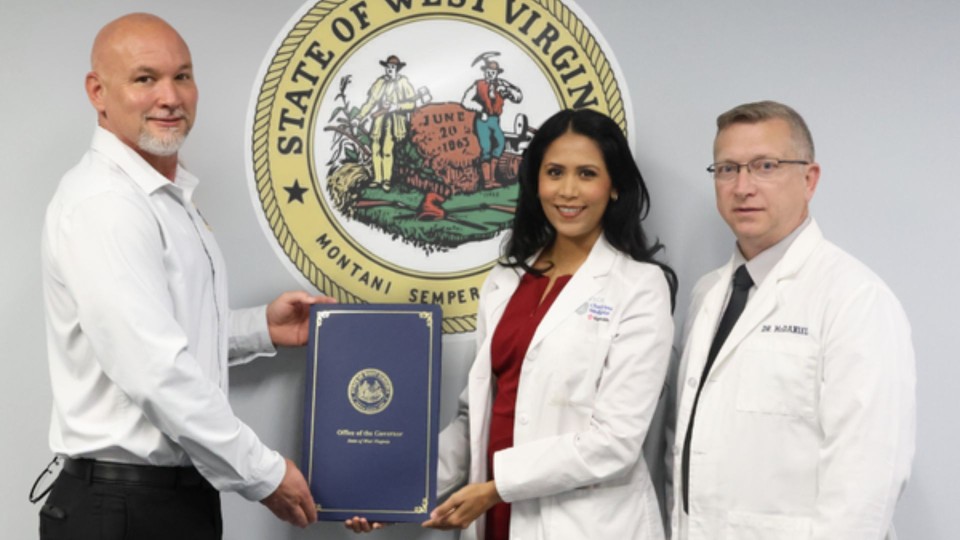
The West Virginia Department of Health launched Stroke Smart State last month after the program was introduced to state health leaders by Vandalia Health CAMC Neurologist Dr. Rena Sukhdeo Singh.
A stroke occurs when blood flow to the brain is disrupted, either by a blocked artery (ischemic stroke) or a burst blood vessel (hemorrhagic stroke), according to the Centers for Disease Control. Without oxygen-rich blood, brain cells begin to die within minutes, causing sudden and lasting damage.
Strokes are the fifth leading cause of death in the U.S., according to the American Medical Association. Approximately one in four people who experience a stroke die within one year, and up to 50% of survivors are left with chronic, long-term disability, according to experts.
A 2021 study suggests that 4.8% of West Virginians have suffered a stroke, outpacing the 3% national average.
The Stroke Smart West Virginia initiative centers on public education, partnerships with health care providers and community outreach designed to help residents recognize the signs of a stroke and understand the importance of immediately calling 911, officials said.
A key component of the Stroke Smart West Virginia campaign is educating the public about the BEFAST acronym, which identifies common stroke warning signs. The acronym stands for balance, eyes, face, arms, speech and time.
The campaign encourages people to watch for sudden loss of balance or coordination, vision problems, facial drooping, weakness or numbness in the arms or legs, and speech difficulties. If any of those symptoms occur, people should call 911 immediately.
In addition to the statewide campaign, CAMC Neurology has expanded its own educational efforts through a program called BEFAST Fridays.
Under the initiative, healthcare providers in the department's outpatient clinic discuss stroke symptoms with patients at the end of each Friday appointment and distribute BEFAST informational fliers. The effort is intended to increase awareness among patients, officials said.
CAMC Neurology also has distributed BEFAST posters throughout nursing units to further promote stroke awareness, according to a release.
“It’s an honor to help bring this program to the state and Vandalia Health,” Singh said. “The hope is that patients and their families will learn the BEFAST symptoms and be able to spot a stroke, stop a stroke and save a life ultimately reducing long-term disability, death and healthcare costs.”