
A new demonstration garden at West Virginia State University is giving community members a place to see — and get their hands dirty with — practical ways to grow food, conserve resources and create habitat in small spaces.
The WVSU Extension Service launched the garden on the University’s Institute campus as a venue for hands-on agricultural, environmental and garden workshops. The site is designed to show people what they can do with the kind of space they might have available at home.
“We want to show people what they can do on, perhaps, a quarter acre of land—common-sized spaces that a homeowner might have available to them,” said Natural Resources Extension Specialist Liz Moss.
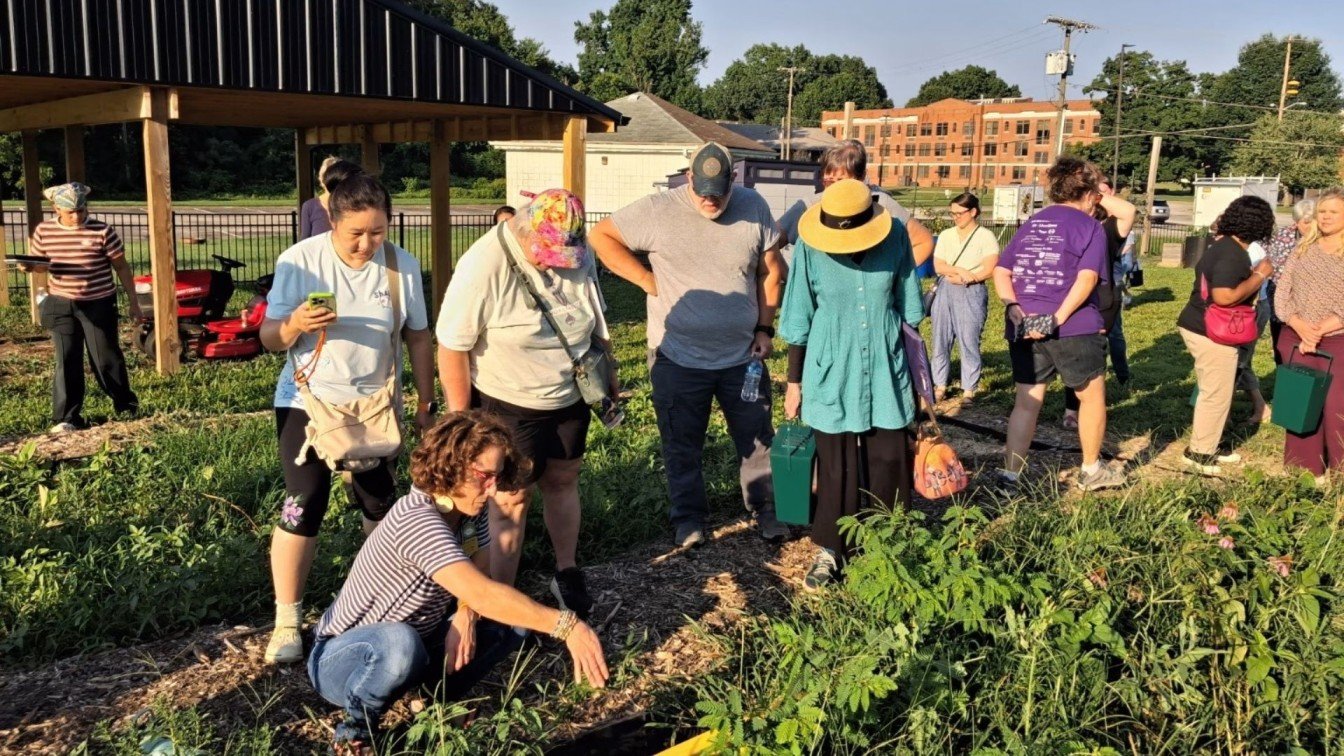
The garden provides a setting where WVSU Extension agriculture and natural resources staff can demonstrate practices rather than simply talk about them. Recent composting workshops, for example, have combined lecture-style instruction with demonstrations at the garden.
“We wanted to show attendees composting in action—to let them get their hands dirty, so to speak—and to show them that they don’t need a lot of space to do it successfully,” Moss said.
The garden also demonstrates how a small yard can serve purposes beyond growing food.
“This site is more than just growing food,” said Extension Educator Jorge Vera. “It allows us to demonstrate how working with the land and not against can transform a small yard into a rich habitat for pollinators, native insects, birds and small animals.”
Potential workshop topics include establishing pollinator gardens, conserving native plants, collecting rainwater, composting and growing mushrooms, fruit trees, berries and other vegetables.
Native plants are another focus of the garden. Vera said demonstrating their use can help community members learn how to support wildlife and create sustainable habitat in their own backyards.
“By promoting native species, we can help with invasive species control, drought and reduce the amount of water we use while improving our soil,” he said.
The garden also provides a way for WVSU Extension to bring its educational mission closer to the communities it serves.
“Extension programming, by its definition, brings a university’s research-based knowledge to people in their own communities,” Moss said.
WVSU Extension Service conducts programs in all 55 West Virginia counties. Moss said the University’s campus community and the greater Kanawha Valley surrounding the Institute campus are also part of that service area.
The garden’s benefits extend beyond the workshops themselves. Harvests from the raised beds are routinely taken to WVSU’s Stinger Produce Market, located across Route 25 from the University’s main entrance. Produce is also distributed to participants in WVSU’s Healthy Grandfamilies program, which provides education and resources to grandparents raising their grandchildren.
The demonstration garden features a covered area for meetings and lectures, along with raised beds where crops and native plants are grown for instructional purposes.
As fall approaches, WVSU Extension staff are working on permanent signage for the space and developing a roster of workshop topics. The garden is located along the western edge of campus, across from Katherine Johnson Plaza and Parking Lot E.
The demonstration garden is supported by the USDA National Institute of Food and Agriculture.
For more information, contact Moss at elizabeth.moss@wvstateu.edu.