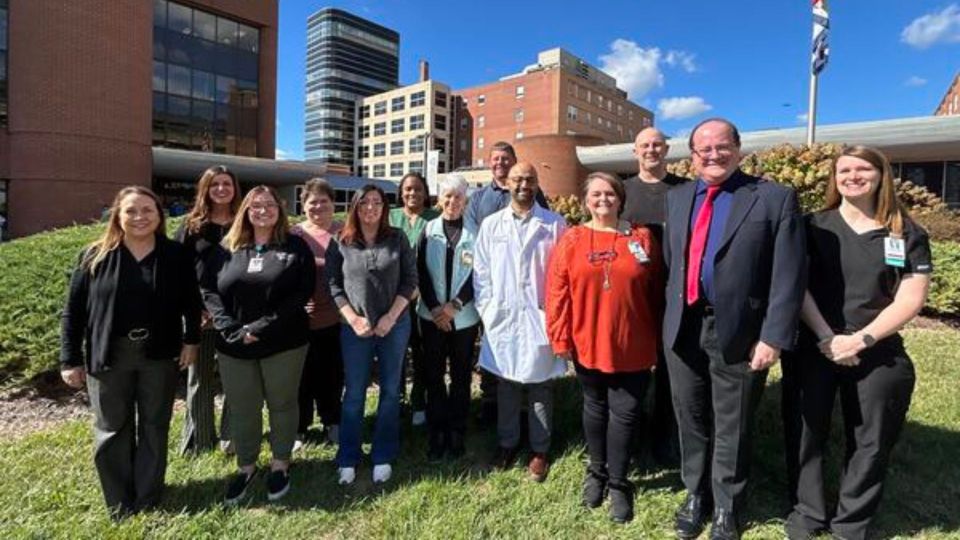

The ALS Association has recognized the CAMC Center for Amyotrophic Lateral Sclerosis Treatment and Care as a nationally recognized treatment facility, a designation that highlights the program’s multidisciplinary approach to caring for patients with ALS.
CAMC officials said the recognition reflects the center’s commitment to providing coordinated, evidence-based care for people living with amyotrophic lateral sclerosis, also known as Lou Gehrig’s disease.
“This recognition is a tremendous honor for our ALS clinic, the Department of Neurology, and all of CAMC and Vandalia Health,” said Dr. James Russell, director of the ALS center. “It speaks to the exceptional dedication of our physicians, nurses, therapists and support staff who work tirelessly to provide comprehensive, compassionate and evidence-based care to individuals living with ALS.”
The ALS Association considers multidisciplinary care the standard for treating ALS, a progressive neurodegenerative disease that affects nerve cells responsible for voluntary muscle movement. Patients with the disease can experience worsening muscle weakness, reduced mobility and difficulty speaking, swallowing and breathing.
CAMC’s ALS treatment center brings together specialists from several disciplines, including neurologists with expertise in neuromuscular diseases, pulmonary physicians, respiratory therapists, physical and occupational therapists, speech-language pathologists, nutritionists, social workers and care coordinators.
Hospital officials said the team-based model allows providers to address a range of patient needs, including mobility, communication, nutrition, respiratory support and psychosocial care.
The designation also creates additional opportunities for CAMC to participate in clinical research, patient education programs and national collaborations focused on improving ALS treatment and advancing efforts to find a cure.
According to CAMC, ALS cases are most often sporadic, with about 90% to 95% occurring without a known family history. Another 5% to 10% are linked to inherited genetic mutations. While there is no cure for the disease, officials said advances in therapies, symptom management and multidisciplinary care have improved patients’ quality of life and survival rates.
ALS typically progresses within two to five years after diagnosis, though some people live longer.